
Swallows are a welcome sight on our reserves. Their arrival in April marks the beginning of our summer work schedule, and (hopefully) warmer weather.
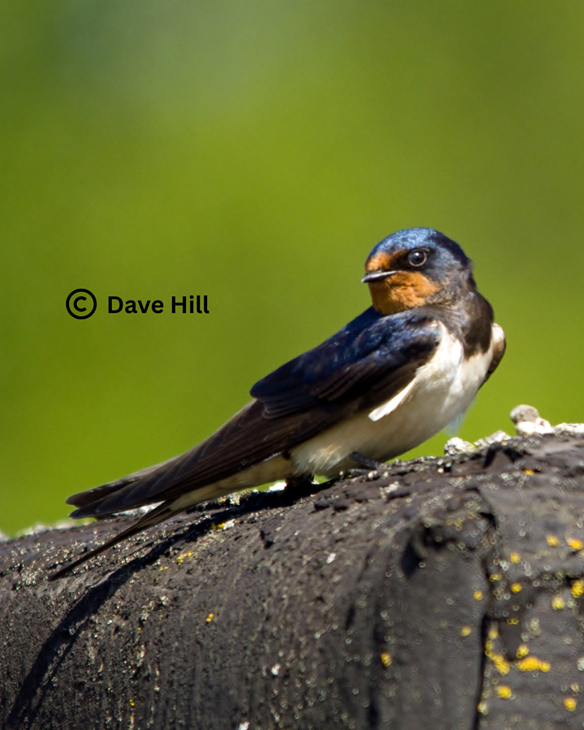
Swallows can often be seen at most of our reserves throughout the summer, scooping mud from the sides of ponds to build nests with, or performing aerial acrobatics over the meadows. They are beautiful birds with dark blue feather on their backs, cream-coloured feathers on their belly and a red throat. Their long sickle shaped wings and deeply forked tails make them fast and agile flyers, feeding exclusively on flying invertebrates which they catch solely in flight. They rarely stop flying and even drink on the wing by skimming water off the surface of a pond, river or a lake.
Swallows migrate north from Africa to Europe every summer to breed. Over their 6000-mile journey they cross the Sahara Desert and the Mediterranean Sea, catching insects on the wing and using the Earth’s magnetic field and landmarks to navigate. This mammoth journey takes 6 weeks of near constant flight! So unlikely is their journey that until the 19th century many people believed they hibernated at the bottom of ponds in the winter!
Male swallows usually return a couple of weeks earlier than females to defend a territory and wait for the females, and they often pair up with the same partners as previous years. Swallows build nests out of balls of wet mud and grass lined with feathers, often built in the eaves of buildings and outhouses. Once the nests are built, they often reuse old nests year after year.
Swallows typically have two broods before the end of the summer, before they flock together in the autumn to start their long migration back to Africa for winter. In the southern counties of the UK there have been occurrences where swallows have overwintered in the UK, a trend which might increase as winters get milder due to climate change.
Picture Copyright: Dave Hill